I have finally gotten my latest project into a form ready for public critiquing. It is the second revision already, but hopefully, after it is torn a part a bit, I will only have a final rewrite to go. My intention was to post it here. However, as I intend to submit it for publication (and likely rejection, as is common in this business) I can't actually print it on my blog(?).
So, if you are interested in reading my latest work, for the express purposes of workshopping/critiquing my short story (3800 words), shoot me off an email (located in my profile at the bottom right of the page, next to the sexy picture of me) and I'll get you a copy.
I'll be away from my blog for the next few days, but I'll check my email regularly.
Thanks!
Friday, May 22, 2009


Wednesday, May 20, 2009
Religion vs. Science in the 14th Century
In 1348, the black death ravaged western Europe. At the time, there was very little scientific knowledge about disease, epidemiology and bacteria. There was very little the medical community could do. Instead, the people of Europe looked to the religious. In that, a fanaticism was born. The worse the plague got, the worse the ideology became in its vain attempts to defeat it. The most extreme of this was a group of Flagellationists who took to the streets, marching from village to village, showing their devotion to God by whipping themselves repeatedly in penance of their sins (and perhaps spreading the plague even further with their travels).
Their actions seem incomprehensible to us, because we possess a greater understanding of our surroundings, albeit incomplete. When a civilization does not understand, it seems to seek solace in religion. If the sun did not rise tomorrow, and our scientists could not understand it, would we be any different?
Their actions seem incomprehensible to us, because we possess a greater understanding of our surroundings, albeit incomplete. When a civilization does not understand, it seems to seek solace in religion. If the sun did not rise tomorrow, and our scientists could not understand it, would we be any different?
Monday, May 18, 2009
Politics
Politics will (hopefully) not become a repetitive topic on this blog. It's too easy to discuss, and like the internet itself, full of uninformed opinions, like mine. So, unless I can attempt to offend everyone, I won't talk about the subject much and when I do, it will be entirely in oversimplified terms.
At the moment, I don't like either party.
Right now, the Democrats are completely in charge of our Federal Government. It seems the party plan is to spend lots of money, take direct control of American Business and to nationalize/socialize (both terms seem to be thrown around despite the significant difference between the two) some of our institutions like healthcare. The Democrats are perhaps modeling U.S. legislation after European socialism. Having spent time in Europe, I hope those policies do not get implemented. Healthcare is atrocious, big business are heavily regulated, and more importantly, every citizen pays heavy taxes through the nose. The sales tax alone in the U.K. is 17.5%
On the other hand, the Republican party scares the p@nts off me. It is a very hypocritical party at the moment, that has lost leadership, guidance, and is imbued with and outdated image of antiquated and stodgy old white guys who wish to legislate morality, to tell you what you can and cannot do, but decry big government. Most of this could be rectified with the exclusion of the Religious right from the party, or at least tempered and opened-mindedness from those that forget the tenant of separation of church and state. Then there is the case of late blooming republican party pseudo-affirmative action. McCain chose a female to be his running mate, (who probably was not qualified), the party chose Michael Steele to chair (who seems to be very qualified). While I see the attempt to change the perception, given the timing, it all seems quite hypo-pol-itical.
Perhaps I am wrong about everything. I don't mind. I'm certainly not an informed opinion. But, more importantly, did I succeed in riling everyone?
At the moment, I don't like either party.
Right now, the Democrats are completely in charge of our Federal Government. It seems the party plan is to spend lots of money, take direct control of American Business and to nationalize/socialize (both terms seem to be thrown around despite the significant difference between the two) some of our institutions like healthcare. The Democrats are perhaps modeling U.S. legislation after European socialism. Having spent time in Europe, I hope those policies do not get implemented. Healthcare is atrocious, big business are heavily regulated, and more importantly, every citizen pays heavy taxes through the nose. The sales tax alone in the U.K. is 17.5%
On the other hand, the Republican party scares the p@nts off me. It is a very hypocritical party at the moment, that has lost leadership, guidance, and is imbued with and outdated image of antiquated and stodgy old white guys who wish to legislate morality, to tell you what you can and cannot do, but decry big government. Most of this could be rectified with the exclusion of the Religious right from the party, or at least tempered and opened-mindedness from those that forget the tenant of separation of church and state. Then there is the case of late blooming republican party pseudo-affirmative action. McCain chose a female to be his running mate, (who probably was not qualified), the party chose Michael Steele to chair (who seems to be very qualified). While I see the attempt to change the perception, given the timing, it all seems quite hypo-pol-itical.
Perhaps I am wrong about everything. I don't mind. I'm certainly not an informed opinion. But, more importantly, did I succeed in riling everyone?
Friday, May 15, 2009
Time Travel Again
Went back into time to rewrite my last blog only to find that my rewrite came out exactly as I originally wrote it. Don't believe me? Then read it for yourself. I'll wait.
See?
As a result of my failed attempt to alter the past, I think for my short story, I will use the method described by a friend over at this forum over here: http://jarillion.myfreeforum.org/about22.html based on Minkowski's block universe.
Essentially, you can't effect the future by changing the past, to do so would in effect create the future you were attempting to change. I liken it to inescapable fate, which is a major theme in my story. I hate the idea of fate, but there is essentially no way to prove/disprove the concept. Sounds like a future blog topic. Hmmm.
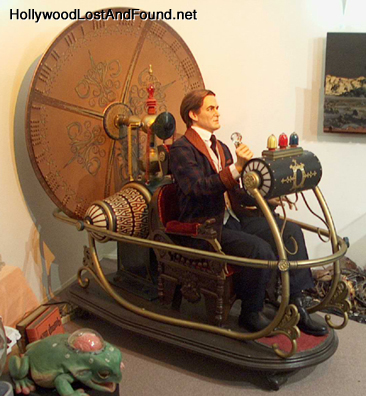
As for the time machine, I'll gloss over it, as I don't think a full technical blueprint is relevant to the story. However, I'm going to lift an idea proposed by my Father-in-law awhile back (who is by my account, extraordinary smart). I think it will appear sound just long enough to get through the story without taking the reader out of it. It will certainly be better than a contraption built from a giant clock, a wooden chair and mandatory blinking lights'.
See?
As a result of my failed attempt to alter the past, I think for my short story, I will use the method described by a friend over at this forum over here: http://jarillion.myfreeforum.org/about22.html based on Minkowski's block universe.
Essentially, you can't effect the future by changing the past, to do so would in effect create the future you were attempting to change. I liken it to inescapable fate, which is a major theme in my story. I hate the idea of fate, but there is essentially no way to prove/disprove the concept. Sounds like a future blog topic. Hmmm.
As for the time machine, I'll gloss over it, as I don't think a full technical blueprint is relevant to the story. However, I'm going to lift an idea proposed by my Father-in-law awhile back (who is by my account, extraordinary smart). I think it will appear sound just long enough to get through the story without taking the reader out of it. It will certainly be better than a contraption built from a giant clock, a wooden chair and mandatory blinking lights'.
Saturday, May 9, 2009
Time Travel
I'm working on a short story and want to use Time Travel as a way to tell it. The story does not revolve around time travel, but the characters will have to use it. So, how involved does one get in explaining the intricacies of something that is so thoroughly hypothetical? I've always felt that one doesn't necessarily explain the Macguffin. If a story calls for vampires, then the story takes place on a 'hellmouth', if you have to go back into time to rescue humpback whales, then you slingshot around the sun; and of course if you are Superman you can just make stuff up.
More important is to stick to a set of rules when time traveling. But what are those rules and are they universal? The Terminator can't travel through time with anything synthetic(on the outside). It's a strict rule that makes for an interesting opening. However, how in the frick does one follow the logic of what happens afterwards? (spoiler) I'm John Conner, and I sent my father back into time to sleep with my mom, get her pregnant with me and raise me to be me. Of course, I can't have actually done that, because I don't exist as of yet.
And consider this: what if the terminator DID actually kill the correct Sarah Connor? What if, as a result of her encounter with the terminator, the incorrect Sarah Conner names her son John and trains him to be a John Conner of the resistance, but not THE John Connor?
How much sense does time travel have to make, and at what point do you just start scratching your head? Consider this website on temporal anomalies in time travel that made me wonder: http://www.mjyoung.net/time/index.htm
If the story is good, can the time travel be bad?
More important is to stick to a set of rules when time traveling. But what are those rules and are they universal? The Terminator can't travel through time with anything synthetic(on the outside). It's a strict rule that makes for an interesting opening. However, how in the frick does one follow the logic of what happens afterwards? (spoiler) I'm John Conner, and I sent my father back into time to sleep with my mom, get her pregnant with me and raise me to be me. Of course, I can't have actually done that, because I don't exist as of yet.
And consider this: what if the terminator DID actually kill the correct Sarah Connor? What if, as a result of her encounter with the terminator, the incorrect Sarah Conner names her son John and trains him to be a John Conner of the resistance, but not THE John Connor?
How much sense does time travel have to make, and at what point do you just start scratching your head? Consider this website on temporal anomalies in time travel that made me wonder: http://www.mjyoung.net/time/index.htm
If the story is good, can the time travel be bad?
Wednesday, May 6, 2009
More Geeky Stuff: Batman 3 and the difficulty of scriptwriting
My last post, I was a bit harsh on the newest X-film, Wolverine. I still stand by my conviction, as it was a poorly developed movie, but I wanted to cushion those comments in a writer's context. I think it is difficult to develop a script for a comic movie. I'll put myself in a writer's shoes, but I'll try it for Batman 3.
The first step is to flesh out ideas, themes, the antagonist(s) and obstacles for the protagonist to overcome. Bruce's motivation for becoming Batman is to cleanse Gotham from corruption. The second film established The Batman's moral code or rule set for accomplishing that mission (he can't kill). In that film, the antagonist's goal was to corrupt. So, the third film shouldn't stray too far from that, and should also (perhaps) see some resolution to Gotham's rampant corruption.
What I would like to see, is the development of Batman as a detective (as opposed to the uber-CSI from the second flick), and some vindication to Bruce's decision to run around dressed as a Bat. The Riddler would be the best candidate as villain, as in this portrayal, he could be dark, narcissistic and extremely obsessed with proving his ability and intelligence over Batman. But, he is also easily manipulated. He has started off as a corrupt detective on the take, having been sharing a jail cell for the last year with a clown of a character (as homage to Heath, we will never see the Joker character again, but can still have his presence felt in the third film). This twists Edward Nigma into something more. Upon his early-release, he is recruited by a mastermind who covers his face in bandages.
Comic enthusiasts would know this character as Hush, but he would take on a different role in the movie. To tie into the first film, Hush would act like Hush from the comics for most of the movie until the reveal near the end. Once the bandages come off, he is revealed as Ra's al Ghul (plus we know Liam Neeson would look the part of Hush).
This character is necessary as a way to measure Batman and to ask of the audience essential questions. If Batman cannot kill, is it okay to allow a villain to die? Has Gotham been put on the road to salvation or is it still seething with crime and corruption? Is Batman better for Gotham, or does he bring out the clowns, costumed villains and true dark-side of human nature, just by his presence?
Throughout the film, the audience would see the transformation of the Riddler character from corrupt to anti-hero to eventual 'good guy' under the influence of those the Riddler associates himself with (the role traditionally taken on by the Catwoman character, still cliche, but with a different costume, and also as a counterpoint from Harvey Dent's transformation in the second film).
At the end of the film, Ra's al Ghul, has a chance to kill Batman, who he sees is preventing his League of assassins from carrying out their plan to destroy Gotham (he is not motivated by revenge). Ra's has to make a choice: kill Batman or not. He has seen the influence Batman has made on Gotham, through the redemption of the Riddler and he fails to kill Bruce. However, the audience is left wondering Ra's true motivation for not killing Batman (perhaps he feels that Batman himself will destroy Gotham).
For complexities sake, we could add in another minor villain, such as Talia (Ra's daughter, she knows Bruce/Batman let her father die, but does not know that he survived), who would be relevant to the film and act as a foil for all the other characters; develop Commisioner Gordon's role as an ally to Batman against his professional role (he hires the Riddler (as detective Nigma) to hunt down the Batman as a show, not taking Nigma as a serious threat to Batman) and lastly, add in the obstacles that add drama, tension and action into the movie.
My notes and ideas would then be converted into a treatment, and then a script would have to be devised. Every line, every dialogue, every scene would have to be just right and approved by the powers that be. It is one thing to come up with an idea (which as to be a pretty good one (and mine isn't) and a whole other beast to hammer that idea into a workable script. The Dark Knight was universally praised by most, critics and viewers alike. The script worked and everything flowed flawlessly from it. The script from X-Men: Wolverine was flawed. Everything else failed from that point on.
The first step is to flesh out ideas, themes, the antagonist(s) and obstacles for the protagonist to overcome. Bruce's motivation for becoming Batman is to cleanse Gotham from corruption. The second film established The Batman's moral code or rule set for accomplishing that mission (he can't kill). In that film, the antagonist's goal was to corrupt. So, the third film shouldn't stray too far from that, and should also (perhaps) see some resolution to Gotham's rampant corruption.
What I would like to see, is the development of Batman as a detective (as opposed to the uber-CSI from the second flick), and some vindication to Bruce's decision to run around dressed as a Bat. The Riddler would be the best candidate as villain, as in this portrayal, he could be dark, narcissistic and extremely obsessed with proving his ability and intelligence over Batman. But, he is also easily manipulated. He has started off as a corrupt detective on the take, having been sharing a jail cell for the last year with a clown of a character (as homage to Heath, we will never see the Joker character again, but can still have his presence felt in the third film). This twists Edward Nigma into something more. Upon his early-release, he is recruited by a mastermind who covers his face in bandages.
Comic enthusiasts would know this character as Hush, but he would take on a different role in the movie. To tie into the first film, Hush would act like Hush from the comics for most of the movie until the reveal near the end. Once the bandages come off, he is revealed as Ra's al Ghul (plus we know Liam Neeson would look the part of Hush).
This character is necessary as a way to measure Batman and to ask of the audience essential questions. If Batman cannot kill, is it okay to allow a villain to die? Has Gotham been put on the road to salvation or is it still seething with crime and corruption? Is Batman better for Gotham, or does he bring out the clowns, costumed villains and true dark-side of human nature, just by his presence?
Throughout the film, the audience would see the transformation of the Riddler character from corrupt to anti-hero to eventual 'good guy' under the influence of those the Riddler associates himself with (the role traditionally taken on by the Catwoman character, still cliche, but with a different costume, and also as a counterpoint from Harvey Dent's transformation in the second film).
At the end of the film, Ra's al Ghul, has a chance to kill Batman, who he sees is preventing his League of assassins from carrying out their plan to destroy Gotham (he is not motivated by revenge). Ra's has to make a choice: kill Batman or not. He has seen the influence Batman has made on Gotham, through the redemption of the Riddler and he fails to kill Bruce. However, the audience is left wondering Ra's true motivation for not killing Batman (perhaps he feels that Batman himself will destroy Gotham).
For complexities sake, we could add in another minor villain, such as Talia (Ra's daughter, she knows Bruce/Batman let her father die, but does not know that he survived), who would be relevant to the film and act as a foil for all the other characters; develop Commisioner Gordon's role as an ally to Batman against his professional role (he hires the Riddler (as detective Nigma) to hunt down the Batman as a show, not taking Nigma as a serious threat to Batman) and lastly, add in the obstacles that add drama, tension and action into the movie.
My notes and ideas would then be converted into a treatment, and then a script would have to be devised. Every line, every dialogue, every scene would have to be just right and approved by the powers that be. It is one thing to come up with an idea (which as to be a pretty good one (and mine isn't) and a whole other beast to hammer that idea into a workable script. The Dark Knight was universally praised by most, critics and viewers alike. The script worked and everything flowed flawlessly from it. The script from X-Men: Wolverine was flawed. Everything else failed from that point on.
Monday, May 4, 2009
Geeky Stuff
May 2nd was Free Comic Book Day. It was also the day after the release of the newest X-men film: Wolverine. Somebody planned ahead. While it was a good weekend overall, the problem though was that both events felt forced.
The popularity of Wolverine as a written character lays within his mysterious past. You can't paste that past up as a summer blockbuster without ruining some of the appeal of the character. Add to that, cliche after cliche, a failed romance story, and a wobbly ending, and the movie only comes out as a a superficial cut, as opposed to a penetrating and sharp story with some teeth and claws.
The movie is underdeveloped starting from the hurried to finish script (a possible writer's strike casualty that never got a rewrite going into actual production) to poor 3-d rendering of some key effects (Wolverine popping his newly-dipped claws in the bathroom looked like animation from The Last Starfighter).
What saves this movie from Halle Berry Catwoman catastrophe is Hugh Jackman himself. He is a good actor. Even though it is difficult for one to relate to an indestructable mutant, Jackman is sincere in his protrayal of the title character. In addition, there were a few guilty pleasures in the movie including the character of Deadpool making an appearance, the Emma Frost cameo and the stand-up performance of Patrick Stewart (despite the poor make-up attempt at making him look younger). Lastly, could it be that the old-folk harboring Logan were actually the parents of an Alpha-Flight member?
Speaking of comics, Free comic book day was a blast, but also a slight dissapointment. I took my daughter in hopes of picking up a few kiddie themed comics, while I looked around the shop, and of course picked up the comics I was interested in. There are about a dozen titles or so, that comic shops must purchase at a nominal fee to then give out for free. It is a great way to promote books, writers or storylines, while drawing in traffic into the brick and mortar comic shops.
My problem was not that most of these shops restricted you to a specified number of the free comics, the shops paid for them, and they can dish them out as they see fit. One shop I went to restricted you to one title, another three. My issue is that the more popular titles, more than likely would be picked over, while the independant writers would be left on the shelf. Wouldn't an average consumer more typically chose a mainstream title like Avengers over another lesser known work? I don't know how free comics could be distributed more evenly, unless certain title were restricted to one per, while others were not. Nevertheless, I picked up a couple I wanted, my daughter got a couple she seemed to like (she's 2, but fairly picky nevertheless) and I still spent a bunch of cash in an event that was described as free.
I love being a nerd!
The popularity of Wolverine as a written character lays within his mysterious past. You can't paste that past up as a summer blockbuster without ruining some of the appeal of the character. Add to that, cliche after cliche, a failed romance story, and a wobbly ending, and the movie only comes out as a a superficial cut, as opposed to a penetrating and sharp story with some teeth and claws.
The movie is underdeveloped starting from the hurried to finish script (a possible writer's strike casualty that never got a rewrite going into actual production) to poor 3-d rendering of some key effects (Wolverine popping his newly-dipped claws in the bathroom looked like animation from The Last Starfighter).
What saves this movie from Halle Berry Catwoman catastrophe is Hugh Jackman himself. He is a good actor. Even though it is difficult for one to relate to an indestructable mutant, Jackman is sincere in his protrayal of the title character. In addition, there were a few guilty pleasures in the movie including the character of Deadpool making an appearance, the Emma Frost cameo and the stand-up performance of Patrick Stewart (despite the poor make-up attempt at making him look younger). Lastly, could it be that the old-folk harboring Logan were actually the parents of an Alpha-Flight member?
Speaking of comics, Free comic book day was a blast, but also a slight dissapointment. I took my daughter in hopes of picking up a few kiddie themed comics, while I looked around the shop, and of course picked up the comics I was interested in. There are about a dozen titles or so, that comic shops must purchase at a nominal fee to then give out for free. It is a great way to promote books, writers or storylines, while drawing in traffic into the brick and mortar comic shops.
My problem was not that most of these shops restricted you to a specified number of the free comics, the shops paid for them, and they can dish them out as they see fit. One shop I went to restricted you to one title, another three. My issue is that the more popular titles, more than likely would be picked over, while the independant writers would be left on the shelf. Wouldn't an average consumer more typically chose a mainstream title like Avengers over another lesser known work? I don't know how free comics could be distributed more evenly, unless certain title were restricted to one per, while others were not. Nevertheless, I picked up a couple I wanted, my daughter got a couple she seemed to like (she's 2, but fairly picky nevertheless) and I still spent a bunch of cash in an event that was described as free.
I love being a nerd!
Subscribe to:
Posts (Atom)

 Posts
Posts